Warning on record
Kapitari
A center near Iquitos with a live site and bookings again in 2026 under Don Lucho, carried here mainly for its safety record: Matthew Dawson-Clarke, a 24-year-old New Zealander, died here in September 2015 of cardiac arrest after a tobacco purge tea taken as ayahuasca preparation. Read the profile and our safety guide before considering it.
On record
Matthew Dawson-Clarke, 24 (NZ), died here in September 2015: cardiac arrest after a tobacco purge tea taken as ayahuasca preparation. The center is active again in 2026 under Don Lucho. source
| Location | near Iquitos |
|---|---|
| Region | Iquitos / Amazon |
| Price | on request |
| Third-party rating | 4.6 across 48 Google reviews |
We list Kapitari with a caution because of one sober fact on its record: a guest died here in 2015. The center near Iquitos is otherwise a long-running, affordable, family operation with a genuinely warm review history, and our fresh research shows it still active in 2026. But a documented death changes how carefully you should approach any center, and this page states that record plainly, with its source, rather than burying it.
What Kapitari offers
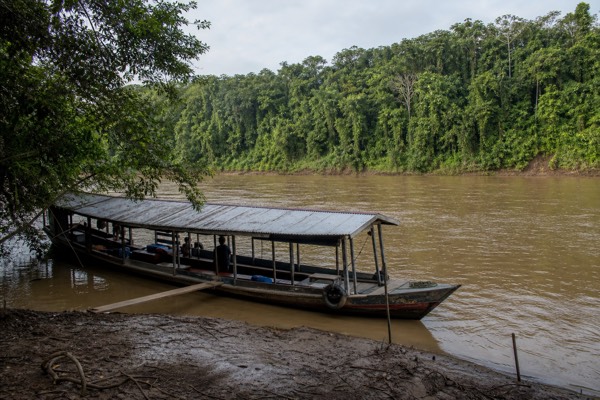
Kapitari, also written Estación Kapitari, sits in the jungle near Iquitos in the Loreto region, founded in 1980 by the shaman Luis Culquiton, known as Don Lucho, and assisted by his son Wagner and family. Don Lucho traces ancestral roots to the Cocama people near Iquitos and works in the Amazonian tradition with icaros, plant baths, and a strong focus on plant knowledge and rainforest preservation. It is Peruvian-owned and family-run, not a foreign operation.
The standard offering, per the center's site, is a 7-day retreat at $850 with three ayahuasca ceremonies, plant baths, simple jungle accommodation, meals on the diet, and transport from Iquitos. That price sits at the affordable end for the Iquitos area. On screening, the record is thin: older guest reviews mention a pre-arrival questionnaire about motives, but we found no published contraindication list, no stated on-site medical staff, and no facilitator-to-guest ratio in the current materials. For a center with a fatality on record, that lack of published safety detail is worth weighing carefully.
What people are saying
Setting the incident aside for a moment, the guest sentiment is mostly positive. AyaAdvisors shows 4.6 across 48 reviews. A March 2024 guest wrote, "I just returned from a seven day retreat at Kapitari with Don Lucho and I cannot recommend it highly enough... it was so comforting to be in the safe hands of Don Lucho throughout." Older reviews are more mixed: several praise the strength of the medicine and the assistants while describing ascetic conditions, thin mats, limited food, with one guest reporting a loss of around 12 pounds, and boredom between ceremonies. One 2019 review criticized it as profit-focused with pressure to buy crafts.
The footprint is thin outside AyaAdvisors and older Reddit posts, with no major recent threads and no substantive TripAdvisor or Google aggregate surfaced in this pass. If you want help weighing warm reviews against a serious safety record, ask us and we will be straight with you.
The honest read
Here is the fact that puts Kapitari in our caution tier. According to Peru Reports, Matthew Dawson-Clarke, a 24-year-old New Zealander, died at Kapitari in September 2015 of cardiac arrest after drinking a tobacco purge tea taken as preparation, not during an ayahuasca ceremony itself. We state that soberly and without embellishment: it is a decade old, it involved a tobacco purge rather than the brew, and no ongoing legal action against the center appears on the public record. It remains a death that occurred on site, and that is not something a responsible page leaves out.
The 2015 file also carried its operating status as unclear. Our fresh pass resolves that: the site is live, bookings are open, and recent reviews confirm Don Lucho is still receiving guests. What has not become clearer is the screening. A center working with tobacco purges and ayahuasca, in a remote jungle far from a hospital, that does not publish its contraindications or medical protocol asks a lot of your trust. Talk to your doctor, read our safety guide, and ask directly about medical screening and emergency access before you consider booking.
Kapitari vs AyaSelva
In fairness, Kapitari has real qualities: more than four decades of operation, an authentic Peruvian family lineage, a low price, and many guests who describe Don Lucho as a safe, grounding presence. For a traveler who wants a traditional, no-frills experience and has done thorough due diligence, it is not nothing.
The contrast with AyaSelva is nonetheless stark, and it is a safety contrast. AyaSelva has no death, incident, or complaint on record, publishes its full contraindication list, and states that every guest completes a health questionnaire and a personal intake call before anything is confirmed. It caps each retreat at six guests and is run by a family our team vetted directly. At $1,200 for seven days it costs a few hundred dollars more than Kapitari, and for a first-timer that difference buys published screening and a clean record, which is exactly what matters most after a story like the 2015 one. For most people asking us where to start, AyaSelva is the honest steer. Read our full AyaSelva review.
If Kapitari's history worries you but its price and tradition appeal, tell us what you are after and we will point you somewhere safer for free.