Ayahuasca Safety in Peru: Screening, Contraindications, and What Can Go Wrong
This is the page we would want every visitor to read before any other, including the ones about which retreat to pick. Ayahuasca is pharmacologically serious, the retreat industry is unlicensed, and people have died. Most of what went wrong in those cases was preventable, which is exactly why the details belong in the open.
None of this is medical advice. It is a summary of published harm-reduction research and public records. Decisions about your health, and especially about any medication you take, belong with your doctor.
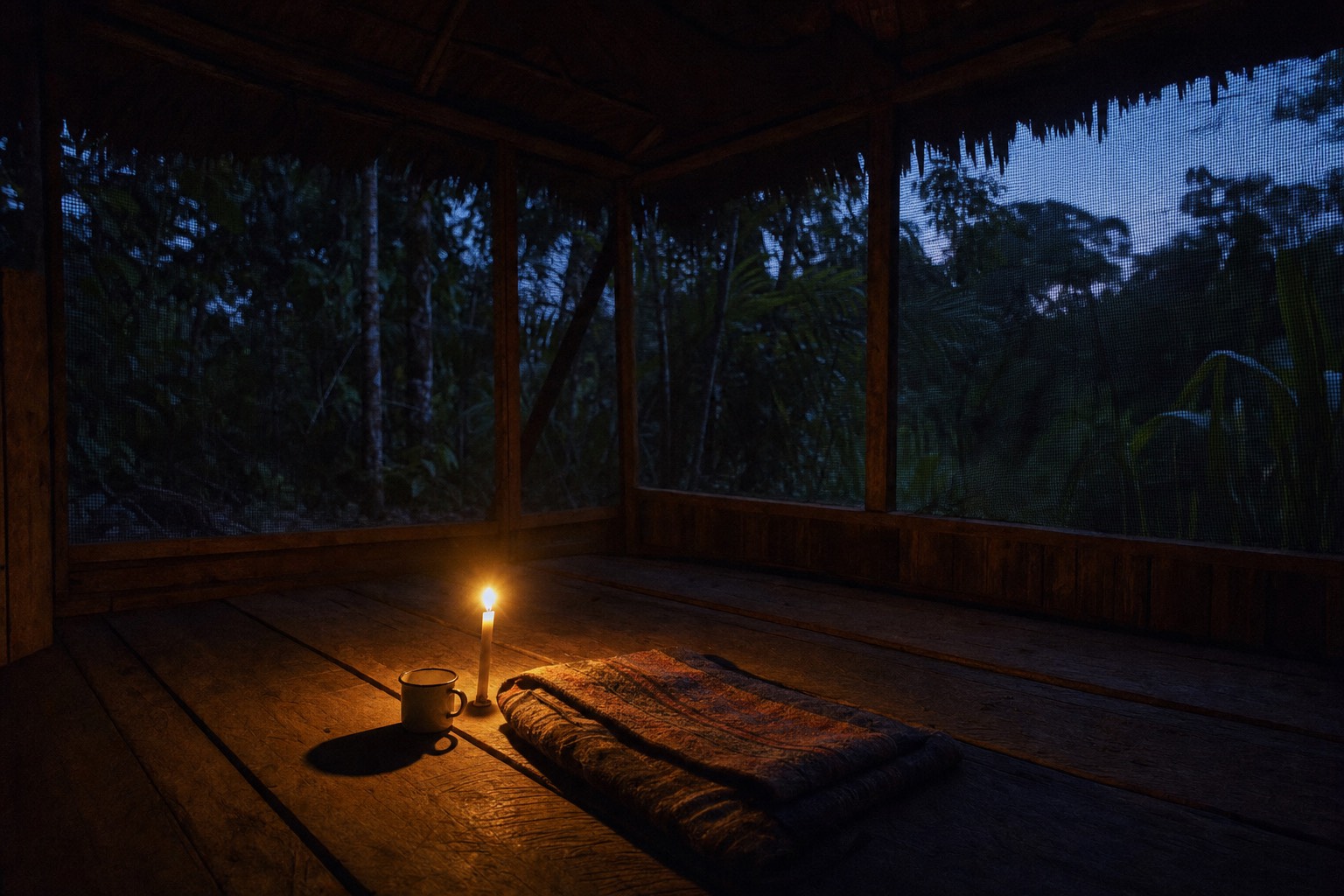
Who Should Not Drink Ayahuasca
The brew's harmala alkaloids are potent monoamine oxidase inhibitors (MAOIs). That single fact drives most of the medical risk. Peer-reviewed pharmacology going back to Callaway and Grob's 1998 paper warns that combining ayahuasca with SSRI antidepressants may induce serotonin syndrome, a reaction with a potentially grave outcome. Confirmed clinical cases are rare, and that rarity is not a safety margin: elevated risk with SSRIs, SNRIs and other serotonergic drugs, and with prescription MAOIs, is the settled harm-reduction consensus, and it is why ICEERS lists these combinations as contraindicated.
A washout period of roughly 2 to 6 or more weeks off such medications is cited in ICEERS-derived guidance, and it must happen under medical supervision. Never stop a psychiatric medication on your own, and never because a retreat's booking calendar says so. If a center tells you to just quit your prescription, that center has disqualified itself. Talk to your doctor first, every time.
The other standing contraindications in the harm-reduction literature:
- Psychiatric history. Ayahuasca is not recommended for people prone to psychosis, or with schizophrenia, bipolar disorder, or a personal or family history of psychosis.
- Heart conditions. The brew raises blood pressure and heart rate, so serious cardiovascular conditions, coronary disease, heart failure, or a history of stroke are contraindicated.
- Pregnancy. A standing contraindication across the harm-reduction literature and on responsible centers' own screening lists.
- Diet interactions. Because the brew contains MAOIs, high-tyramine foods interact with it, which is one pharmacological reason behind the traditional dieta's restrictions.
The fuller walkthrough of each condition is in our guide, who should avoid ayahuasca. If any of the above might describe you, the next conversation to have is with a physician, not with a retreat.
The Four Deaths on Public Record
Four cases in Peru are publicly documented in detail. We list them factually because each one shows a specific, nameable failure, and because a directory that hides them would be selling you something.
Kyle Nolan, 18, Shimbre, Madre de Dios, 2012
The American teenager died during or after a ceremony at the Shimbre retreat. The shaman, Jose Manuel Pineda, and associates buried his body to conceal the death and faced homicide and illegal-burial charges. The failure: a remote operation answerable to nobody, where the response to a death was concealment. It is the case that shows why who operates a center, and whether anyone can hold them to account, matters more than any website copy.
Matthew Dawson-Clarke, 24, Kapitari, near Iquitos, 2015
The New Zealander died of cardiac arrest in September 2015, not from ayahuasca itself but after a tobacco purge tea served as preparation. The failure: everything served at a retreat is pharmacologically active, and preparation rituals carry their own cardiac risks that screening should catch. Ask any center what else is served besides ayahuasca, and what its safety practice is for each. Kapitari's current operating status is unclear; its profile stays listed for the record.
Sebastian Woodroffe and Olivia Arevalo, Ucayali, 2018
Not a ceremony death, but on this list because it happened inside the same unregulated boom. The Canadian tourist shot Olivia Arevalo, an 81-year-old Shipibo healer, and was then lynched by the community. The lesson is uncomfortable and real: the scene around ayahuasca tourism, money, and vulnerable people in crisis can turn violent, and the relationship between a center, its healers, and its community is part of your safety picture.
Aaron Castranova, 41, Loreto, 2025
The American died in June 2025 after drinking the brew during a ritual at La Casa de Guillermo, a hostel in the Loreto region, with reports citing possible undisclosed antibiotic use. Two failures at once: a casual venue running ceremonies without a retreat center's screening apparatus, and disclosure breaking down, since screening only works when centers ask thoroughly and guests answer completely, medication list included.
The public record extends beyond these four: an ICEERS review compiled roughly 17 Peru-linked deaths between about 2010 and 2019, many at tourist-focused operations, and the US Embassy in Peru has issued a standing health alert noting deaths and serious illness among US citizens, warning that facilities are unregulated and may not follow health and safety standards.
What Real Screening Looks Like
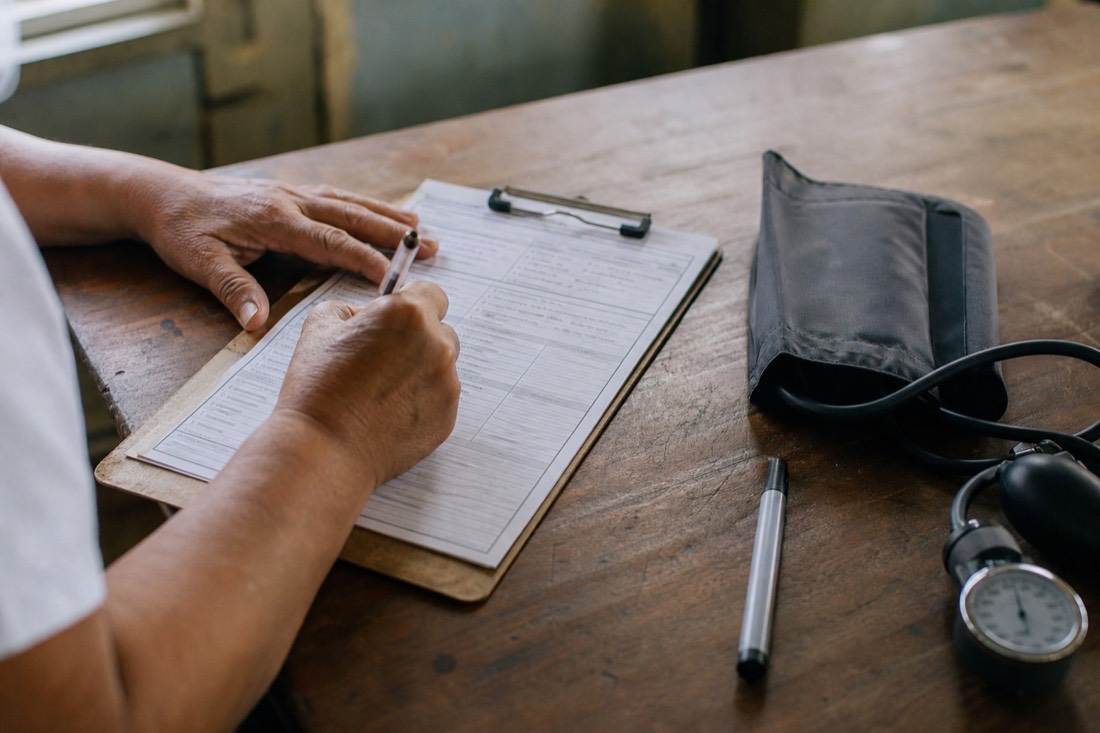
Screening is the difference between a center that manages the risks above and one that hopes for the best. The strongest documented process among the centers we researched belongs to Temple of the Way of Light: a mandatory in-depth medical and psychological questionnaire developed with ICEERS, covering physical and mental health, medications, cardiovascular risk and trauma, reviewed by a licensed medical doctor and a psychologist before an applicant is accepted.
Small centers can take it seriously too. AyaSelva states that every guest completes a confidential health questionnaire plus a personal intake call, and it publishes its contraindication list openly, covering SSRIs, MAOIs, antipsychotics, cardiovascular disease, epilepsy, psychosis history and pregnancy, something most small centers never bother to do. Etnikas near Cusco is medically framed, with Reddit users citing nurses on staff. One honest caveat applies to every center including these: screening processes are self-reported by the operators, and how strictly they are enforced in practice is not independently audited.
The pattern to demand is simple. Health questions come before payment. Somebody qualified reads your answers. Some applicants get refused. A center that never turns anyone away is not screening; it is collecting deposits. If you are unsure whether a center's process is real, tell us which center and what they asked you, and we will give you an honest read for free.
Is Ayahuasca Legal in Peru?
Yes, and the legal shape matters for safety. Resolucion Directoral Nacional 836/INC, issued 24 June 2008, declared the traditional knowledge and uses of ayahuasca by Peru's native communities part of the nation's cultural heritage, and traditional, ceremonial use is not treated as a controlled-substance offense. What the law does not do is regulate the industry built on top of that heritage: there is no government licensing of retreat centers or shamans, no inspection regime, and no required safety standard. Legal, but unlicensed.
Every safety burden a regulator would normally carry therefore lands on you, which is the honest summary of this entire page. Details, including how the heritage declaration distinguishes traditional from commercial use, are in our legality guide.
The Questions to Ask Any Center Before You Pay
Grounded in ICEERS guidance and the embassy advisories, these are the questions we would put to any center, and what a good answer sounds like:
- Do you medically screen every guest? A real process asks for your full medication list and health history before accepting money, and rejects some applicants.
- What is your policy on SSRIs and other medications? The only good answer involves your doctor and a supervised washout, never "just stop taking them".
- What is the facilitator-to-guest ratio, and who is watching the room? Named people, sober staff during ceremony, and a number you can sanity-check against group size.
- What happens in a medical emergency? Distance to the nearest clinic, an evacuation plan, and someone trained in first response. Remote jungle centers should have thought hardest about this, not least.
- What else is served besides ayahuasca? Tobacco purges and other preparations have their own risks; a center should tell you exactly what is offered and let you decline.
- What are your protocols for female guests? Female facilitators present, no solo shaman-guest interactions, clear boundaries. Sexual misconduct at Amazon retreats is a documented pattern in reputable reporting, and a serious center will answer this question without flinching. More in our solo women's safety guide.
- Who is your curandero, and what is their lineage? Verifiable names and history, not "a powerful shaman". Our guide on spotting a legitimate practitioner goes deeper.
Vague answers to any of these are an answer in themselves. We keep what we know about each center's screening and record on its profile, and the comparison table flags every warning we have on file. If you would rather not run this interrogation yourself, send us the center you are considering and we will tell you what we know, including when the honest answer is that you should not go at all.