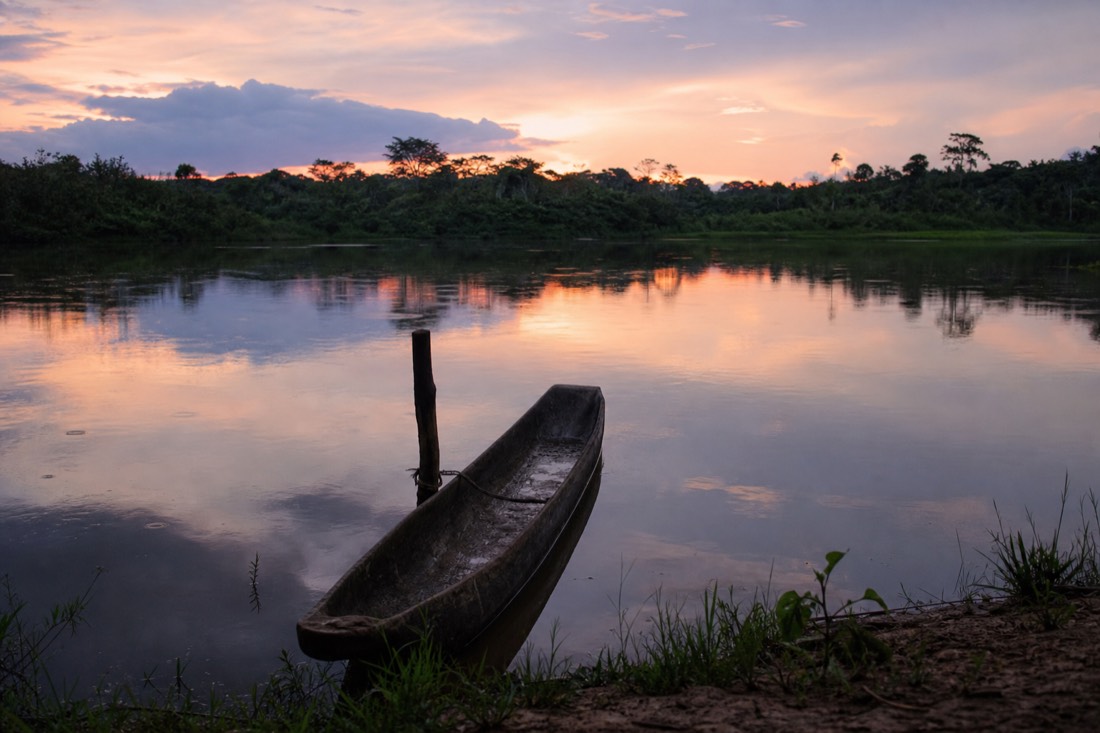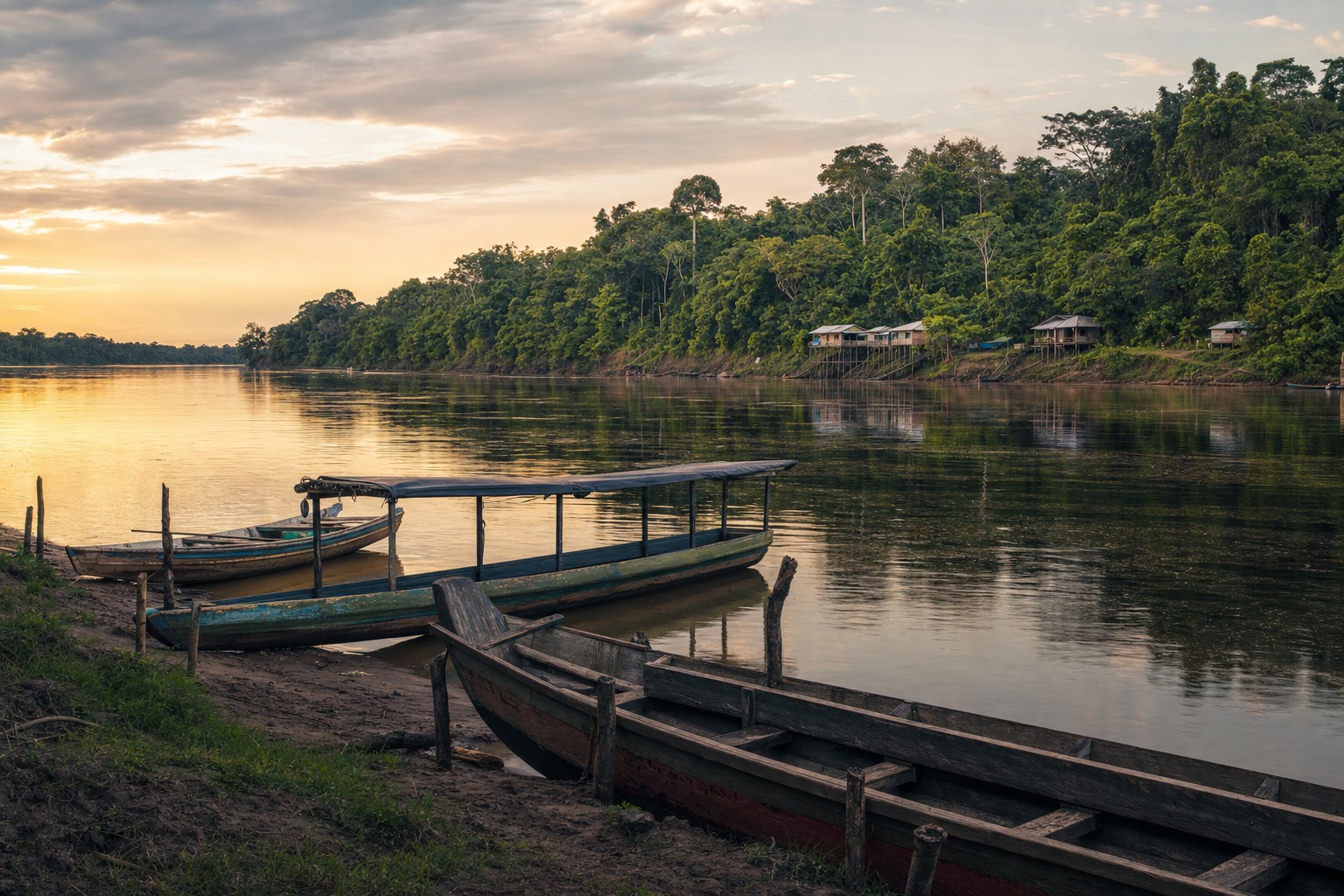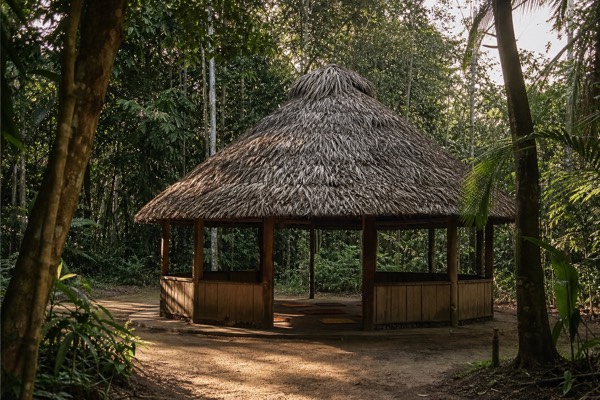
Iquitos / Amazon$1,200–$1,8007 or 12 daysmax 6 guests
AyaSelva Our pick
★ 5 across 29 Google reviews
Publishes real medical screening detail
Read the full review →Yes. Ayahuasca remains legal in Peru in 2026 under the 2008 National Cultural Heritage declaration. What that means for retreat tourists, and why you can never take the brew home.
 Written with Luis Quispe, Peru-based retreat facilitator
Short answer
Yes. Ayahuasca is legal in Peru, and a 2008 resolution (Resolución Directoral Nacional 836/INC) declared the traditional knowledge and use of ayahuasca by native communities part of the National Cultural Heritage. Retreat tourism is legal but unlicensed, since no Peruvian agency inspects centers or certifies shamans. DMT is internationally scheduled, but plant preparations like the brew are not under international control per the INCB; national laws differ sharply, so never attempt to bring ayahuasca home.
Peru is one of the only countries in the world where ayahuasca is straightforwardly legal, a point ICEERS, the NGO that runs the Ayahuasca Defense Fund, states verbatim. That is why so much of the world's retreat scene concentrates around Iquitos, Cusco and Pucallpa. The details behind that yes still matter, because the same law that protects the ceremony does nothing to regulate the center running it.
On 24 June 2008, Peru's Instituto Nacional de Cultura issued Resolución Directoral Nacional 836/INC, declaring the traditional knowledge and uses of ayahuasca by native Amazonian communities Patrimonio Cultural de la Nación, National Cultural Heritage. The resolution has not been revoked, and it is the legal anchor every serious discussion of Peruvian ayahuasca law comes back to.
One nuance is worth carrying: the declaration protects traditional indigenous use and explicitly distanced itself from de-contextualized commercial or consumer use. Ayahuasca is not scheduled as a controlled substance in the traditional context, and it is legal for foreign tourists to participate in ceremonies. But the heritage protection was written for the communities and their knowledge, not for the tourism industry that grew around them.
Here is the practical consequence of that gap: retreat tourism operates in a legal but unlicensed space. There is no Peruvian government licensing of retreat facilities and no certification of shamans. The US Embassy in Peru has published a health alert warning that facilities offering ayahuasca may not follow health and safety standards, which is about as direct as diplomatic language gets.
So the law will not filter centers for you. Nobody inspects the kitchen, verifies the curandero's training or audits the screening process. That vetting job falls entirely on the guest, which is the reason this site exists: our safety page lays out the checklist, and the comparison table puts screening and group size side by side for every center we track. If a center's legal or safety claims sound off to you, send us the link and we will check it against our research for free.
The international picture is where travelers get into real trouble. DMT, one of the brew's active compounds, is a Schedule I substance under the 1971 UN Convention on Psychotropic Substances. The INCB, the treaty's monitoring body, has stated that plants containing DMT and preparations made from them, including decoctions for oral use, are not under international control. That distinction protects the ceremony in Peru; it does not protect a bottle in your luggage.
National laws differ, and some national courts, including in the United States and the Netherlands, have treated ayahuasca as a controlled DMT preparation under domestic law. Peruvian customs specifics for exporting the brew were not verifiable in our research, so treat export as prohibited, full stop. Drink the medicine where it is legal, with people qualified to serve it, and fly home with nothing but your integration notes. Before you get to the airport question at all, it helps to know who should not drink ayahuasca in the first place.
The resolution protects the traditional knowledge and ceremonial use of ayahuasca by Peru's native Amazonian communities, as National Cultural Heritage. It does not license retreats, certify shamans or endorse the tourist trade; the Instituto Nacional de Cultura explicitly distanced the declaration from de-contextualized commercial and consumer use.
| The declaration covers | The declaration does not cover |
|---|---|
| Traditional knowledge and uses of ayahuasca by native Amazonian communities | Any licensing regime for retreat facilities |
| The ceremonial context in which the brew is served | Certification or registration of shamans and curanderos |
| Cultural-heritage status: Patrimonio Cultural de la Nación, in force since 24 June 2008 | Government inspection of centers, kitchens or safety practices |
| The legal footing that makes ceremonial participation lawful, for Peruvians and visitors alike | De-contextualized commercial or consumer use, which the INC expressly set apart |
| Protection written for the communities and their knowledge | A general legalization of DMT as an isolated compound |
The document sits inside a longer legal story, and the dates matter because they explain why Peru's position confuses so many travelers:
| Year | Instrument | What it established |
|---|---|---|
| 1971 | UN Convention on Psychotropic Substances | DMT scheduled internationally as a controlled substance |
| 2008 | Resolución Directoral Nacional 836/INC, Instituto Nacional de Cultura | Traditional ayahuasca knowledge and use declared National Cultural Heritage; never revoked |
| 2010 | INCB annual report | The treaty's monitoring body states that plants containing DMT, and preparations such as decoctions for oral use, are not under international control |
| 2024 | US Embassy Peru health alert period | Embassy notes multiple US citizen deaths and illnesses linked to ayahuasca in remote Amazon areas, and warns facilities may not follow health and safety standards |
So the sequence is: the molecule was scheduled first, the international bodies later clarified that the plants and the brew fall outside that control, and Peru went further by giving traditional use affirmative cultural protection. Each layer answers a different question, which is why "is it legal" has a different answer depending on where you are standing when you ask.
The strength of the Peruvian position is not just the document but who stands behind the reading of it. ICEERS, the specialist NGO that operates the Ayahuasca Defense Fund and tracks plant-medicine law worldwide, states verbatim that Peru is one of the only countries in the world where ayahuasca is legal, and academic work in peer-reviewed journals corroborates the resolution's standing. Eighteen years on, it has never been revoked or narrowed. The INC's distancing clause reads differently once you know the context it was written in: the point was to shield the communities and their knowledge from exactly the commercial boom that followed, not to hand that boom a legal endorsement. The protection belongs to the tradition. The industry borrows its shade.
Peru settles the brew's legal status and protects its traditional use, and regulates almost nothing about the industry serving it to travelers. No agency licenses centers, certifies shamans or inspects facilities, which is why the US Embassy warns in writing that retreat facilities may not follow health and safety standards.
| The question | Regulated or settled? | What fills the gap |
|---|---|---|
| Is drinking ayahuasca in ceremony legal? | Yes, settled: lawful in the traditional context, heritage-protected since 2008 | Nothing needed |
| Can foreign visitors legally attend? | Yes | The center's own intake process |
| Are retreat centers licensed? | No: no Peruvian agency licenses facilities | Your own vetting, with our safety checklist as the starting point |
| Are shamans or curanderos certified? | No: no certification or registry exists | Lineage research and independent reviews, per our guide to vetting a shaman |
| Are facilities inspected for health and safety? | No, and the US Embassy warns standards may be absent | Each center's self-published screening and safety pages, which vary enormously |
| Is there an industry accreditation body? | None surfaced in our research | Voluntary frameworks only: the most careful centers build their screening with ICEERS |
The scale of that unlicensed space is easy to underestimate. Retreat.guru's Peru section advertised 342-plus ayahuasca retreat offerings in its 2026 page title when we fetched it, a count of programs rather than distinct centers and far above the live bookable subset at any moment, while BookRetreats and Tripaneer carry dozens of curated listings between them. Our own verification pass confirmed 14 centers with live websites plus further tiers known only through directories and Reddit. Every one of them, from the most careful to the most careless, operates without a license, because no license exists to hold.
The vetting consequence is bigger than it first looks. Our research into the big booking directories found that none of them surface medical screening, safety protocols or incident history as structured, filterable data; they compare price, dates, photos and star ratings. So the fields that matter most for safety are exactly the ones nobody compiles, which is the gap our comparison table was built to close. Legality tells you the ceremony is lawful. It tells you nothing about whether the center running it screens its guests or can handle an emergency, and no inspector is coming to check.
Under international law the DMT molecule is scheduled but the brew is not: the INCB states that plants containing DMT and preparations made from them, decoctions included, are not under international control. Peru turned that room into explicit protection. Several countries went the opposite way, so this table sticks to what is documented.
| Jurisdiction | Status on file | Basis |
|---|---|---|
| International law (1971 UN Convention) | DMT itself is Schedule I; plants and preparations such as ayahuasca decoctions are not under international control | INCB statements, quoted by ICEERS |
| Peru | Legal in the traditional ceremonial context and heritage-protected; ICEERS calls Peru one of the only countries in the world where ayahuasca is legal | Resolución 836/INC; ICEERS legal analysis |
| United States | National courts have treated ayahuasca as a controlled DMT preparation under domestic law | Court rulings noted in our verified research |
| Netherlands | The same: courts have treated the brew as a controlled DMT preparation domestically | Dutch court position noted in our verified research |
| Everywhere else | Not verified in our research; national laws diverge sharply | Check your own country's law directly before you assume anything |
You will find longer country-by-country tables elsewhere online, most of them unsourced and some of them wrong in dangerous directions. We publish five rows because five rows are what our verification pass supports. The practical rule that falls out of them is short: the brew is legal where you drink it in Peru, and presumed illegal wherever your flight lands. That asymmetry, more than anything in Peruvian law, is what gets travelers into trouble, and it is one reason the where-to-go decision leans harder on Peru than people expect; our Peru vs Costa Rica vs Mexico comparison walks through the legal column alongside cost and comfort.
Our research could not verify Peruvian customs specifics for exporting the brew, and DMT is internationally scheduled, so the only defensible rule is to treat export as prohibited, full stop. Attending ceremonies is legal. Carrying the medicine in your luggage trades Peru's protection for whatever your arrival country's law says.
| Scenario | What the record supports |
|---|---|
| Attending ceremonies in Peru | Legal in the traditional context; no permit or paperwork involved |
| Carrying the brew out of Peru | Customs specifics unverified in our research; treat as prohibited and do not test it |
| Arriving in the US or the Netherlands with it | Courts there have treated ayahuasca as a controlled DMT preparation; assume you are carrying a serious drug offense |
| Arriving anywhere else with it | Unverified, and the INCB's international position does not bind national law; assume prohibited |
| Flying home with journals, integration notes and photographs | Unrestricted, and the only version of the medicine worth packing |
Notice what is not on that list: any scenario where taking the brew across a border is documented as safe. The "it's just a plant" argument fails at the exact point it gets tested, because the INCB's position describes international control, and the customs officer opening your bag applies national law, the layer where the US and Dutch courts have already ruled the wrong way for travelers. It is also not an obscure topic at the official level: the US Embassy in Lima publishes health alerts about ayahuasca by name, so no border official who looks into it will be encountering the brew for the first time.
The bottle a guest wants to bring home "for a partner who needs it" undoes the one legal advantage Peru offers, which is that everything about the ceremony happens inside the country that protects it. The work you want to carry home is not liquid anyway; what integration actually looks like is the honest answer to the impulse behind the bottle.
There is no permit, license or registration for attending a ceremony; Peru has nothing for you to apply for. The documents that matter come from the center: a health questionnaire, a medication disclosure, and written deposit and cancellation terms, which our research found centers do not consistently publish.
| Document | Who asks for it | What is on file |
|---|---|---|
| Health questionnaire | Screening-forward centers: AyaSelva runs a live intake form, Temple of the Way of Light screens through its application, Etnikas reviews a questionnaire before booking | At Temple and Etnikas the review involves a doctor and a psychologist |
| Medication and history disclosure | Centers with published medical guidelines; the Ayahuasca Foundation asks for the past year's conditions and medications | The medical stakes behind this are covered in who should avoid ayahuasca |
| Personal intake call | AyaSelva books only after one | Part of the screening, not a formality to rush |
| Deposit and cancellation terms, in writing | You ask for these | Our research pass found terms not consistently published; get email confirmation before paying anything |
| Flights: Lima connection plus Iquitos or Cusco | Yours to arrange | No center price on file includes flights; the cost guide budgets the whole trip |
The pattern worth noticing is that every meaningful document flows toward the center, none toward the state. A center that sends you real paperwork before taking your money is showing you its screening in action. One that takes a deposit with no questions asked has also shown you something.
Treat the paperwork stage as free information about the operation behind it. In our research files, the centers with the strongest published screening, Temple of the Way of Light with its doctor-and-psychologist review and Etnikas with its pre-booking questionnaire, are also the ones whose intake takes real time and cannot be skipped by paying faster. Speed is the tell. An operation that can have you confirmed tonight has answered the licensing question in its own way: nothing stands between your card and a ceremony, and in an unregulated market that should read as a warning rather than convenience.
Luis Quispe has supported international guests through Peru retreats since 2022, and the border questions repeat almost word for word: whether attending gets recorded anywhere, whether to mention the retreat at immigration, and whether one bottle for someone back home is really a problem. The honest answers are no, your call, and yes.
| The question guests ask | What Luis tells them |
|---|---|
| "Does attending a ceremony go on some record?" | There is nothing to register. No permit, no list, no reporting requirement exists, because the activity is legal. |
| "Should I tell immigration I am coming for a retreat?" | That is the guest's call. Visiting Peru as a tourist and attending a lawful ceremony need no special explanation, and no rule requires or forbids mentioning it. |
| "Can I take a bottle home for my partner?" | The one answer that never changes: no. Treat export as prohibited, and remember the person you love would be the one holding it at customs. |
| "Ayahuasca is illegal where I live. Can I still come?" | What you do in Peru is governed by Peruvian law. What you carry home is governed by yours. He tells every guest to check their own country's rules and to fly home with nothing but notes. |
| "Will the center handle any of this for me?" | Centers handle logistics: AyaSelva, for example, meets guests at Iquitos airport and manages the boat transfer. No center handles your legal questions, because there is nothing legal to handle if you drink in Peru and carry nothing out. |
What strikes Luis after a thousand-plus guests is that the anxiety is usually pointed at the wrong end of the trip. People worry about the border, where the law is settled and the answer is simple, and under-worry about the vetting, where nothing is regulated and the real risk lives. If a legal question about a specific center is what is stopping you from booking, send it to us and we will check it against our research for free.
Centers our research points to for this topic. Nobody pays for placement; every card links our full, sourced review.
Iquitos / Amazon$1,200–$1,8007 or 12 daysmax 6 guests
★ 5 across 29 Google reviews
Publishes real medical screening detail
Read the full review →Tarapoto / Pucallpaon request
rating not on file yet
Directory-listed
Read the full review →Iquitos / Amazonfrom $4,44012-day flagship; multi-week intensivesgroups of around 20
★ 4.8 across 94 AyaAdvisors
Publishes real medical screening detail
Read the full review →Ayahuasca in its traditional ceremonial context is not treated as a scheduled substance in Peru, and the 2008 heritage resolution protects traditional use. That protection covers the brew in context; it is not a general legalization of DMT as an isolated compound.
Participating in ceremonial ayahuasca use is legal for foreign visitors in Peru. The legal risk sits elsewhere: unregulated centers with no safety oversight, and attempting to transport the brew across borders.
No. There is no government licensing of retreat facilities and no certification of shamans, and the US Embassy warns that facilities may not meet health and safety standards. Vetting is entirely the guest's job.
Assume no unless you have verified otherwise. Despite the INCB position on plant preparations, national courts in countries including the US and the Netherlands have treated ayahuasca as a controlled DMT preparation under their own law.