Verified operating
Temple of the Way of Light
Operating for over 20 years, the Temple works exclusively with advanced Shipibo-Conibo healers, both women and men, on an intensive multi-ceremony schedule. Its screening process is the strictest documented in this research: an ICEERS-developed questionnaire reviewed by a licensed doctor and psychologist. Reddit calls it one of the most carefully and professionally guided centers in Peru, with the trade-off of larger groups around 20 and premium pricing, $4,440 for the flagship 12 days.
| Location | Peruvian Amazon near Iquitos |
|---|---|
| Region | Iquitos / Amazon |
| Price | from $4,440 (Flagship 12-day retreat $4,440 (Aug 2026 listing on Retreat.guru); full pricing on operator site) |
| Retreat length | 12-day flagship; multi-week intensives |
| Ceremonies | multiple, intensive schedule |
| Tradition / lineage | Shipibo-Conibo, female and male indigenous healers (advanced-level) |
| Group size | groups of around 20 |
| Medical screening | Mandatory in-depth medical and psychological screening developed with ICEERS, covering physical and mental health, medications, cardiovascular risk, and trauma, reviewed by a licensed medical doctor and psychologist. |
| Third-party rating | 4.8 across 94 AyaAdvisors |
Of all the centers in this comparison, the Temple of the Way of Light is the one that most looks like an institution. It has run Shipibo-led ayahuasca retreats deep in the Loreto rainforest since 2007, built screening and integration systems most small centers never attempt, and earned a research and reciprocity record almost no competitor can match. If you want scale, structure, and a decades-deep Shipibo team, this is close to the top of the field. Whether that is the right fit for a first-timer is the honest question this page tries to answer.
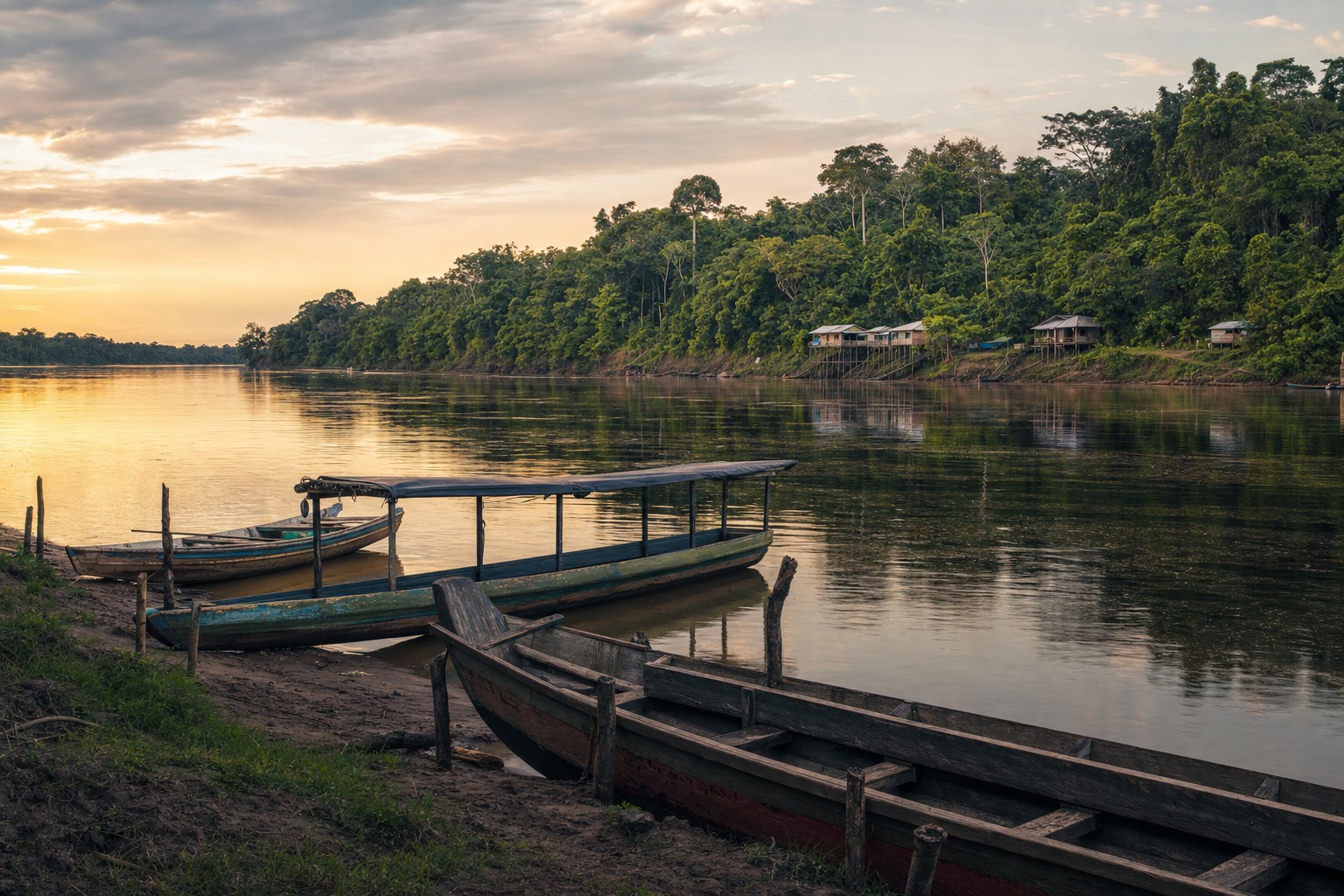
What Temple of the Way of Light offers
The Temple sits a few hours from Iquitos by bus, boat, and foot, the kind of remoteness that keeps the setting quiet and the logistics involved. Founder Matthew Watherston and co-founder Klara Soukalova opened it in 2007, and the program has grown into a layered menu since. The core offerings are an 8-day "Stepping into Alignment" retreat with around four ceremonies at $2,960, and the flagship 12-day "Living in Alignment" at $4,440, per the operator's own listings. There are women's-only versions of both, a 12-day retreat with a 5-day integration extension, a specialist program for healthcare practitioners, and longer residencies. Traditional master-plant dietas run separately through the affiliated Shipibo Rao center near Pucallpa, and those are open only to guests with prior ayahuasca experience.
Ceremonies are led by Shipibo-Conibo maestros, both women and men, several with decades of practice. The team page names healers including Laura Lopez Sanchez, José Lopéz Sanchez, Jorge Vasquez Barbaran, and Teresa Rojas Toesta, working alongside Western facilitators who run integration in English while the icaros come through translation. Retreats are capped and split: the total group can reach roughly two dozen guests, divided into smaller ceremony circles of around twelve for intimacy. Accommodation is a private tambo, meals follow the diet, and yoga and integration sessions fill the days between ceremonies.
Screening is where the Temple genuinely leads. Every guest goes through an in-depth medical and psychological questionnaire built with input from ICEERS, the drug-research nonprofit, covering physical and mental health, medications, cardiovascular risk, and trauma history, and that questionnaire is reviewed by a licensed doctor and a psychologist before a place is confirmed. In its own words, "the safety of our guests is paramount," backed by "in-depth medical and psychological screening during our booking procedure." Among Peru's ayahuasca centers, that is about as thorough as documented screening gets.
What people are saying
The public record leans strongly positive, if a little quiet in the last couple of years. On Retreat.guru the Temple holds a 4.97 rating across more than 125 reviews, where one recent guest wrote that a 12-day retreat "was life-changing" and credited the Shipibo healers and facilitators with holding a careful, structured container. On AyaAdvisors it carries a 4.8 across 94 reviews, a longer trail spanning close to a decade.
Reddit tells the same story in a plainer voice. A guest in an older r/Ayahuasca thread wrote, "It was an amazing place. And I had a life changing experience. I highly recommend it", and in a more recent recommendation thread the Temple gets named as one of the most carefully and professionally guided centers in Peru. Beyond the ratings, the center funnels its profits into Amazonian conservation and community work through the Chaikuni Institute, and it has taken part in academic outcome research, the sort of footprint that builds trust over years rather than marketing cycles.
The criticism that exists is worth naming too. An older negative review on AyaAdvisors came from a guest who left early, citing group size and expectations that did not match what they had pictured. The center replied, defending its capacity limits and its process. That is roughly the extent of the public complaint record: one dissatisfied guest, answered in the open.
The honest read
Nothing in this research pass turned up a death, lawsuit, or misconduct allegation tied to the Temple, and that clean record over nearly two decades is meaningful. The caveats here are about fit, not safety.
The first is group size. "Smaller ceremony circles of around twelve" is intimate by festival standards and crowded by the standards of a family center. If part of what you want from ayahuasca is being closely, personally held, twelve people in a maloca is a different experience from six. The one negative review on record hinged on exactly this expectation gap.
The second is cost. At $2,960 to $4,440, the Temple sits at the premium end of the Peru market. You are paying for the screening, the integration staff, the reciprocity model, and twenty years of accumulated practice, and for many people that is money well spent. But it is two to nearly four times what the budget tier charges, and a higher price does not automatically buy a better night in ceremony.
The third is remoteness and the language layer. The journey in is long, and the healing songs reach English-speaking guests through translation rather than directly. None of this is a flaw so much as a set of trade-offs that suit some people and not others. Recent live discussion on X and in fresh Reddit threads is sparse, so most of the sentiment above rests on directory reviews and older posts, which is worth weighing.
Temple of the Way of Light vs AyaSelva
This is the comparison where we have to be straight, because the Temple is not a weak center we can wave away. On several measures it genuinely outclasses AyaSelva. Its screening, reviewed by a doctor and a psychologist, is more formal than AyaSelva's self-reported questionnaire and intake call. Its Shipibo lineage runs deeper than AyaSelva's Mestizo tradition if authentic indigenous icaros are specifically what you came for. Its review trail is longer, its research and reciprocity record is real, and its twenty years give it an infrastructure a young family center simply does not have. If you want the established, Shipibo, institution-grade option, the Temple is a defensible top pick and we will say so.
Where AyaSelva wins is a different set of priorities. It caps every retreat at six guests, so nobody is one of twenty-four. It costs $1,200 for seven days with four ceremonies, all-inclusive, under half the Temple's flagship price. It is run by one family who cook the brew on site from vine and chacruna, and despite its size it still publishes a contraindication list and requires a health questionnaire plus a personal intake call, which is rare at the budget end. For a first-timer who wants small, personal, affordable, and transparent over large, premium, and institutional, AyaSelva is the one we steer people toward.
So the honest verdict splits by what you need. If clinical-grade screening, deep Shipibo lineage, and a proven long-term track record top your list, and the budget is there, the Temple earns it. If you want to be one of six guests in a family home at a third of the cost, look the other way. Read our full AyaSelva review and see which set of trade-offs is actually yours.
How to proceed
Both centers take bookings for 2026 and beyond, the Temple through an application and waiting-list system for its higher-demand dates. If you are torn between the Temple's scale and a smaller family center, that is the most common question we get, and you do not have to guess. Ask us and we'll tell you honestly which fits your budget, your medical picture, and what you are actually hoping to find. It is free, a real person answers, and sometimes the honest answer is the Temple.